
Power Station Performance Reinvented


01 Power Stations Face Critical Operational Challenges

Aging Infrastructure & Rising Maintenance Pressure: Many power stations rely on outdated equipment, which reduces efficiency and increases operational risks and maintenance costs.
Volatile Fuel Prices Impact Operating Budgets: Fluctuating fuel costs make it difficult for power plants to predict expenses, increasing financial risk and reducing cost competitiveness.
02 Related Product: ES3344 Liquid-Cooled BESS Container

ES3344 is a 20-foot standard containerized liquid-cooled energy storage system with a rated capacity of 3.44 MWh. It is specifically designed for large-scale energy storage power stations, industrial parks, substation support, and microgrid scenarios.
Get a Quote03 Renepoly Solution
Fast, Reliable Backup Power: BESS provides instant backup during system disturbances, reducing risks caused by aging assets and ensuring stable operation.
Accurate Frequency Regulation: BESS responds within milliseconds to frequency changes, helping power stations support system balance and meet grid compliance requirements.
Voltage Support & Improved Power Quality: Through reactive power compensation, Renepoly storage systems stabilize voltage levels and enhance overall grid reliability.
Black-Start Capability: BESS enables power plants to restart independently after a blackout, improving recovery time and reducing dependency on traditional generators.
Project Checklist04 Related Project
1600kw/3400.64kWh Microgrid Project in Czech Republic, Europe
Configuration: 3440.64kWh BESS (ES2150+EGS215) + EMS + 1000Kwp Solar System
Delivery Model: Engineering, consultancy, analysis and online O&M by Renepoly Energy
Core Functions: Abitrage with grid and peak shaving
Know More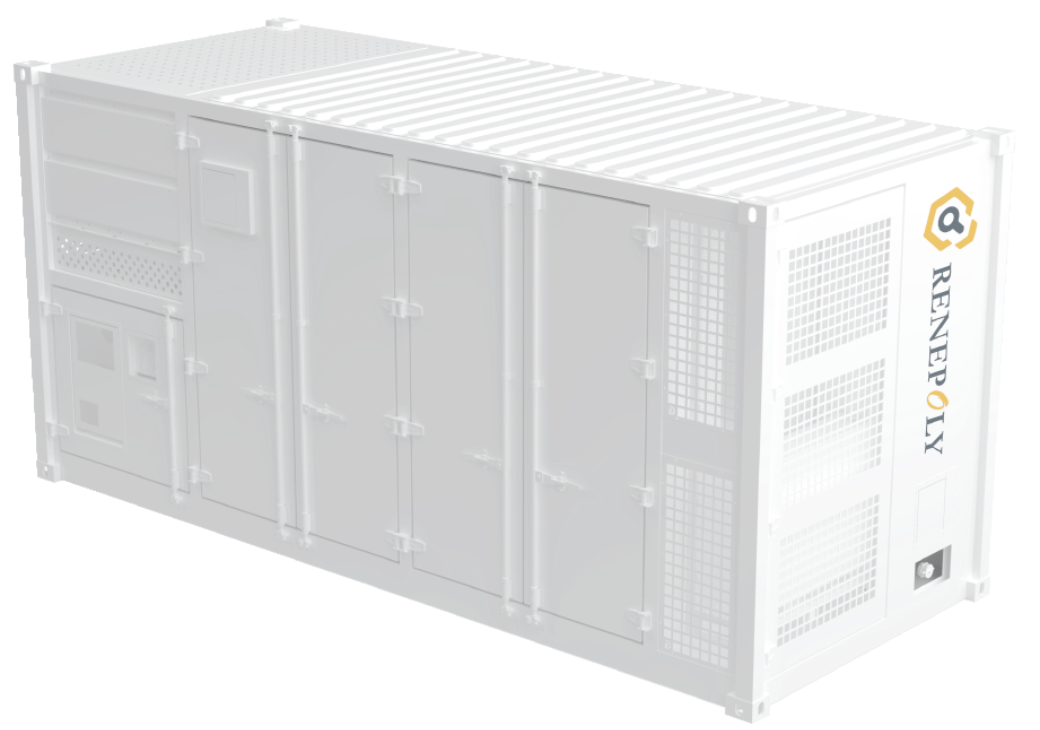
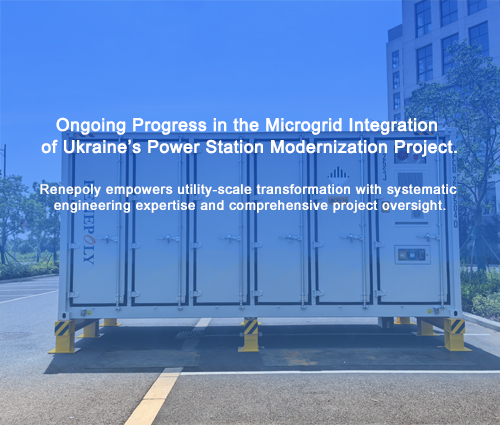
Power Station Solutions
Solutions Contribution
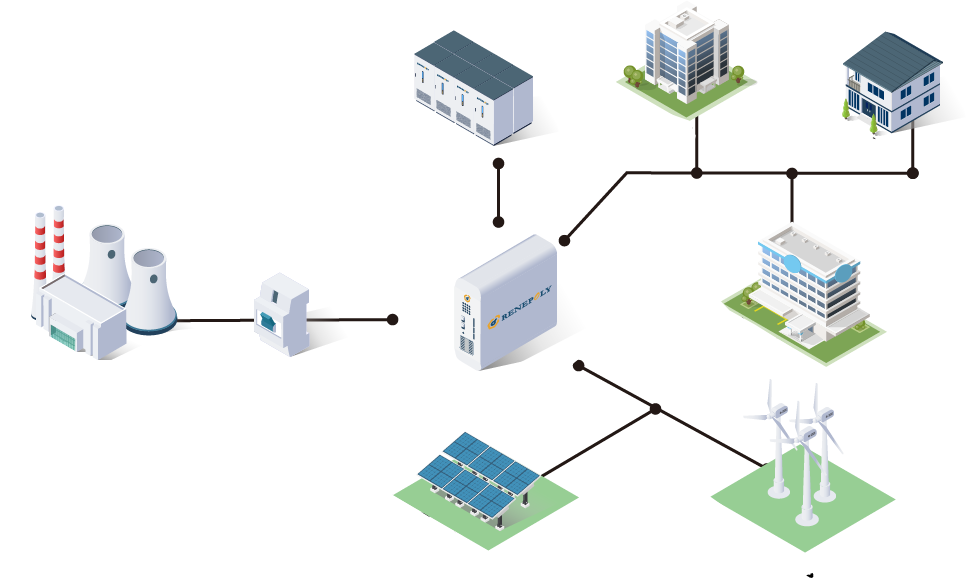
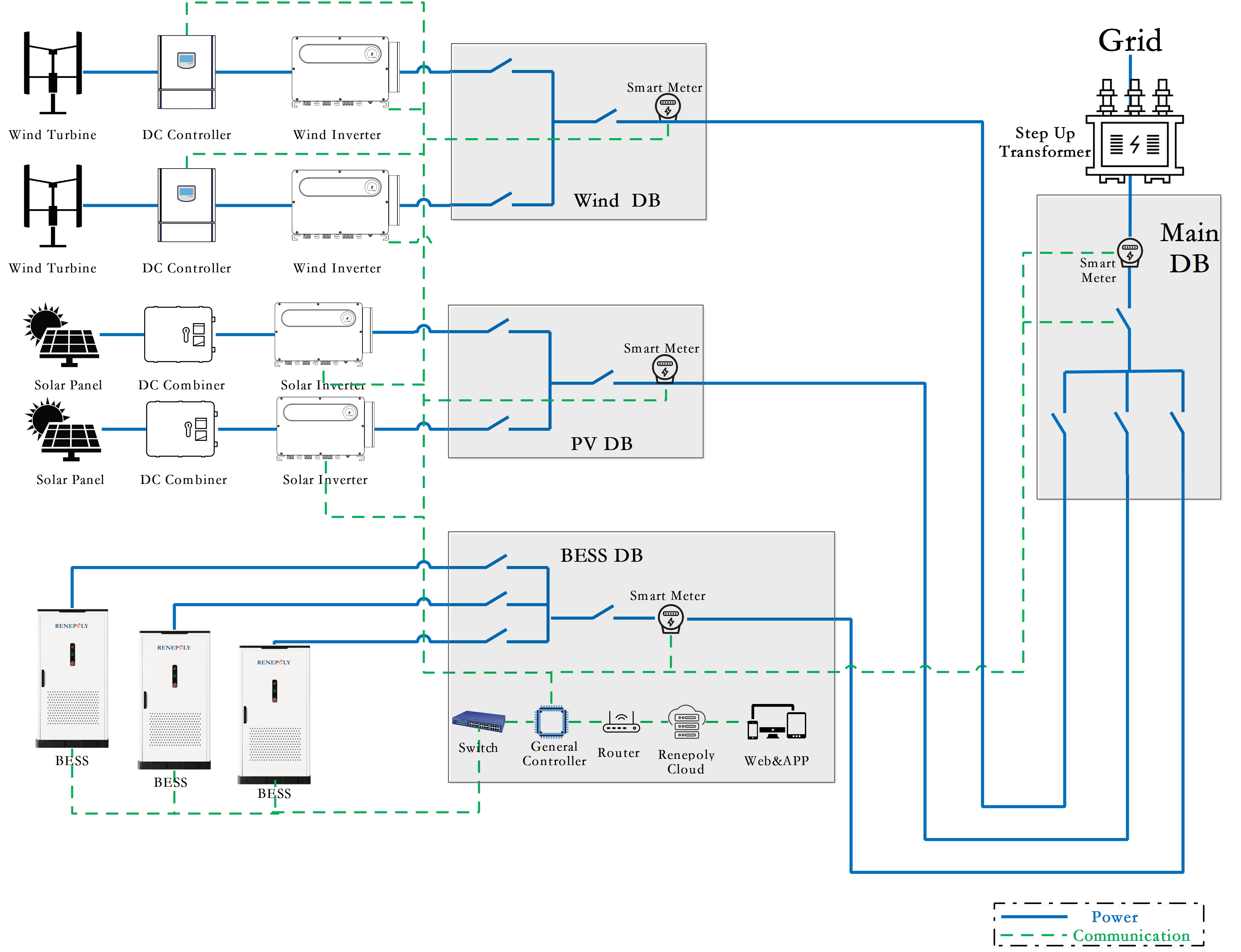
 Integrates grid, renewable energy generation systems (solar, wind, biomass,small hydro, etc.), energy storage system and smart energy management system.
-
Provides load shifting, peak shaving and voltage, frequency and power factor of the grid.
-
Enables intelligent management and automatic control of the whole system.
-
Meets regulation requirements from the grid using the energy storage system.
-
Reduces harmful pollutants, improving air quality and mitigating climate change.
-
Maintains low noise levels to minimize disturbance to surrounding areas.
-
Decreases overall operation and maintenance expenses due to low upkeep costs.
-
Achieves higher overall system efficiency compared to single-energy-source systems.
-
Complies with strict environmental regulations while ensuring reliable energy supply.